Fraud detection. Developer productivity. KYC and AML checks. Not the demos that fill keynotes, but recurring work with real users and results you can measure. That is where the returns are.
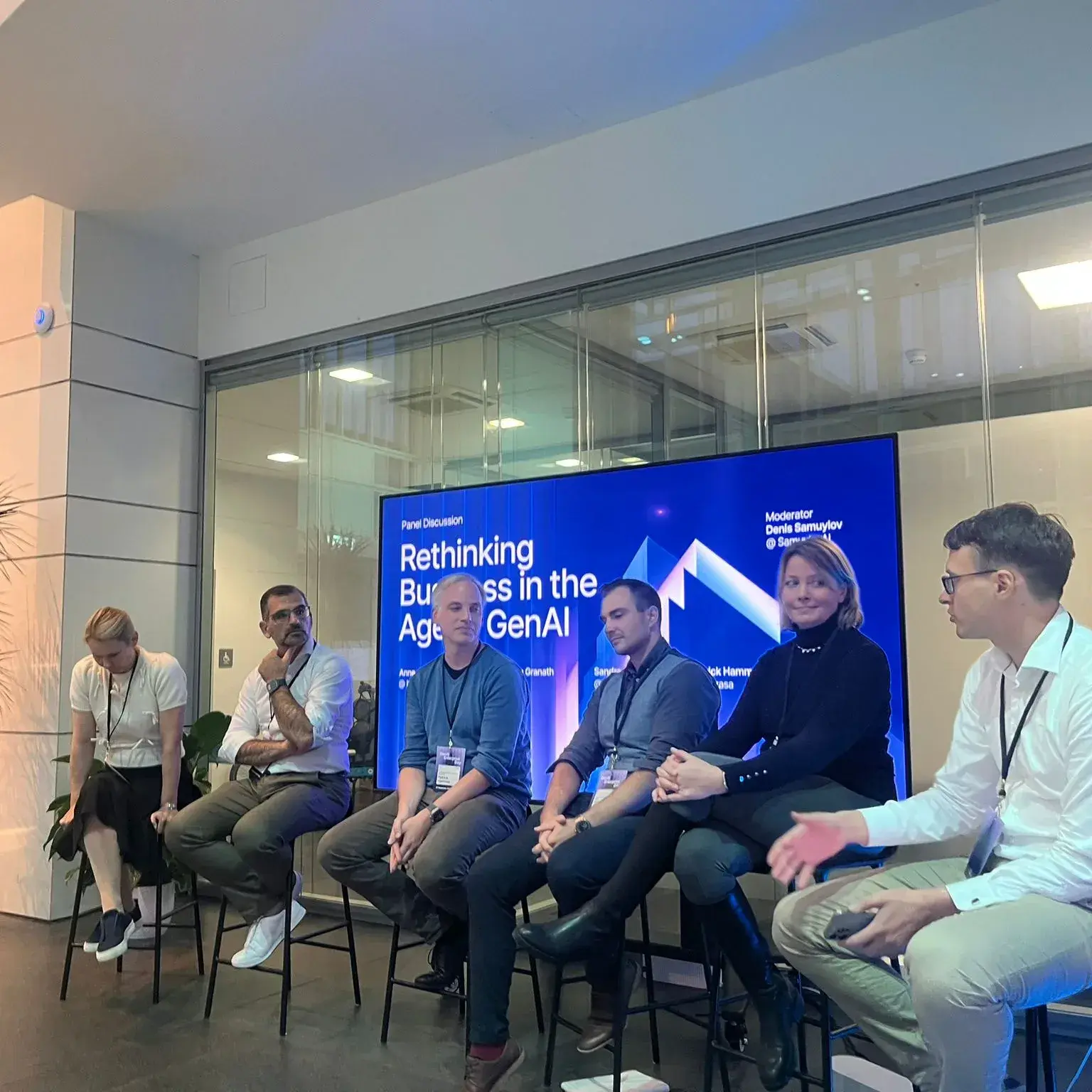
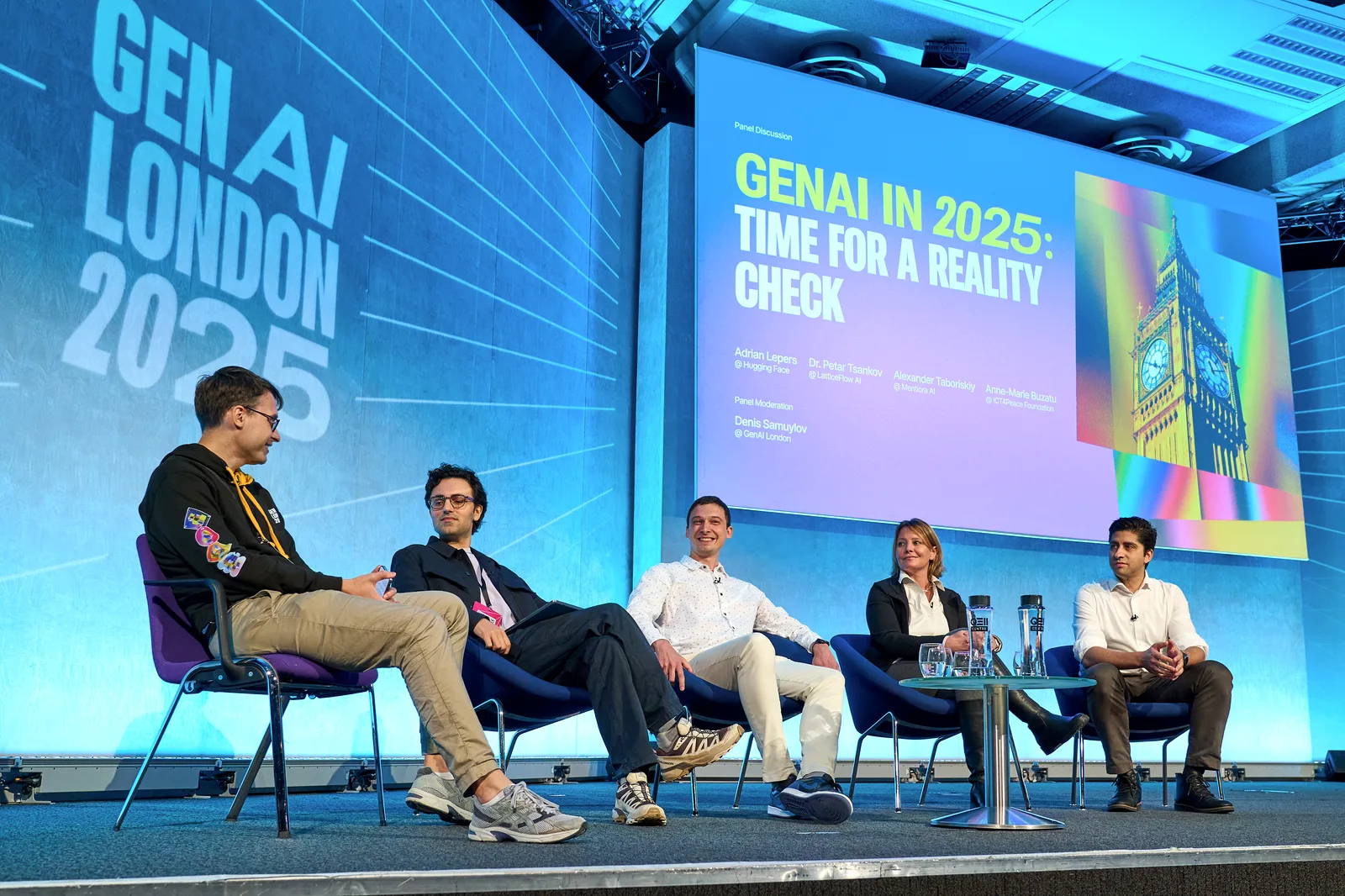
That was the case made on the main stage of the first GenAI London (opens in a new tab), at the QEII Centre on 24 October 2025. Denis moderated GenAI in 2025: Time for a Reality Check, with Adrian Lepers (Hugging Face (opens in a new tab)), Dr. Petar Tsankov (LatticeFlow AI (opens in a new tab)), Alexander Taboriskiy (Mentiora AI (opens in a new tab)) and Anne-Marie Buzatu (ICT4Peace Foundation (opens in a new tab)).
Start with an outcome, not a pilot
#The backdrop was MIT NANDA’s report The GenAI Divide (opens in a new tab) and its 95% headline. The panel’s reading: that failure rate was predictable, given how many organisations had rushed out pilots with little strategy behind them. The returns come from starting with a business outcome and picking the boring use case that serves it.
Governance you can execute
#Governance only works when it is built into the technology and can be executed. A policy written up and hung on the wall governs nothing. Where an error can cause harm, that means safeguards inside the system and clear responsibility for the outcome.
Control your stack
#Open models are no longer the alternative; they are the baseline. Smaller domain-specific models, sparse mixture-of-experts architectures and quantisation make them worth weighing against the task, the running cost and the control you need.
What it means for your project
#Our own case studies are boring in exactly this sense: classifying documents, enriching lead data, changing airline tickets. Recurring work, a clear owner, results you can check.
Pick a recurring task with a known baseline, an owner and a cost of error. That gives a pilot a clear test before rollout. See advisory & implementation, or Start a conversation.