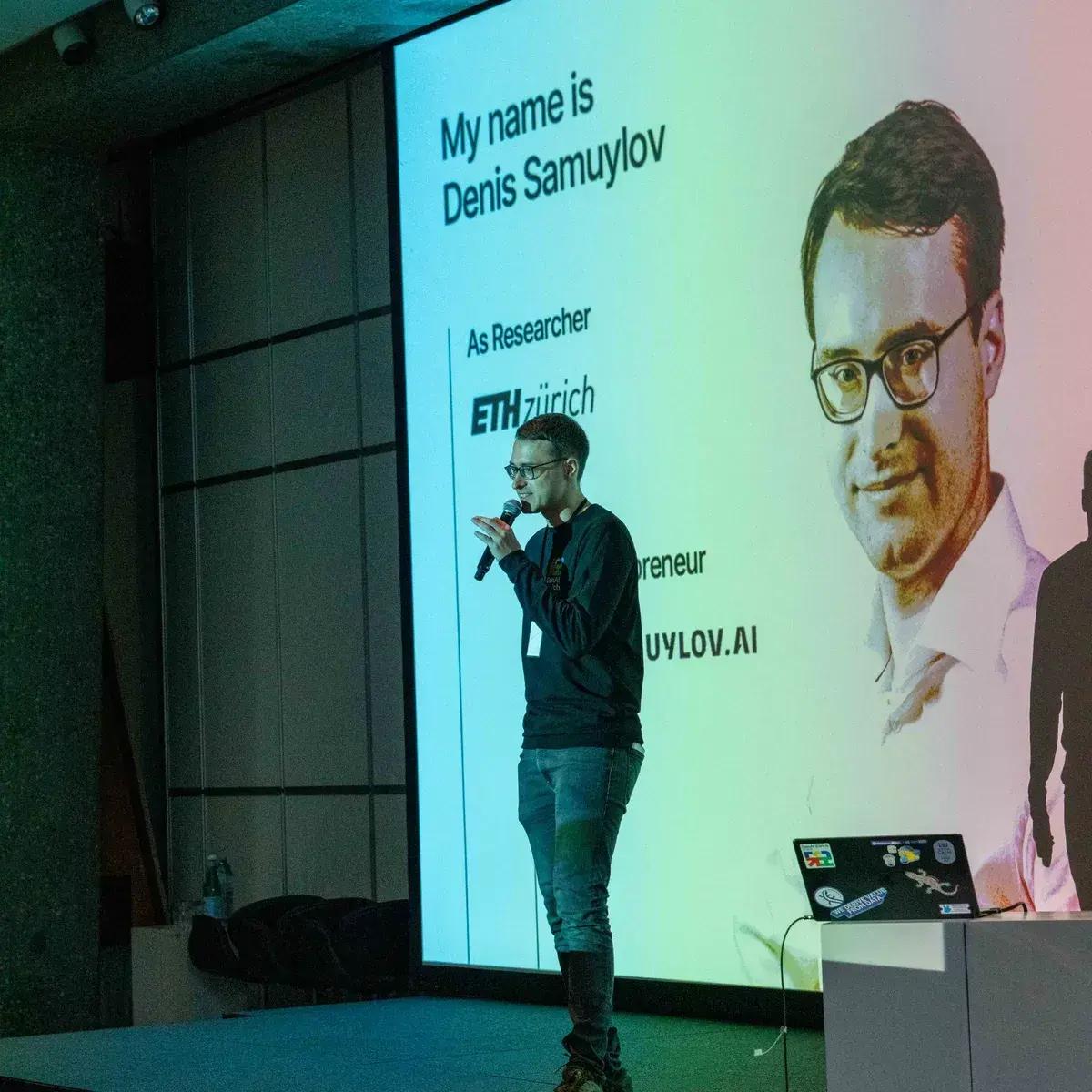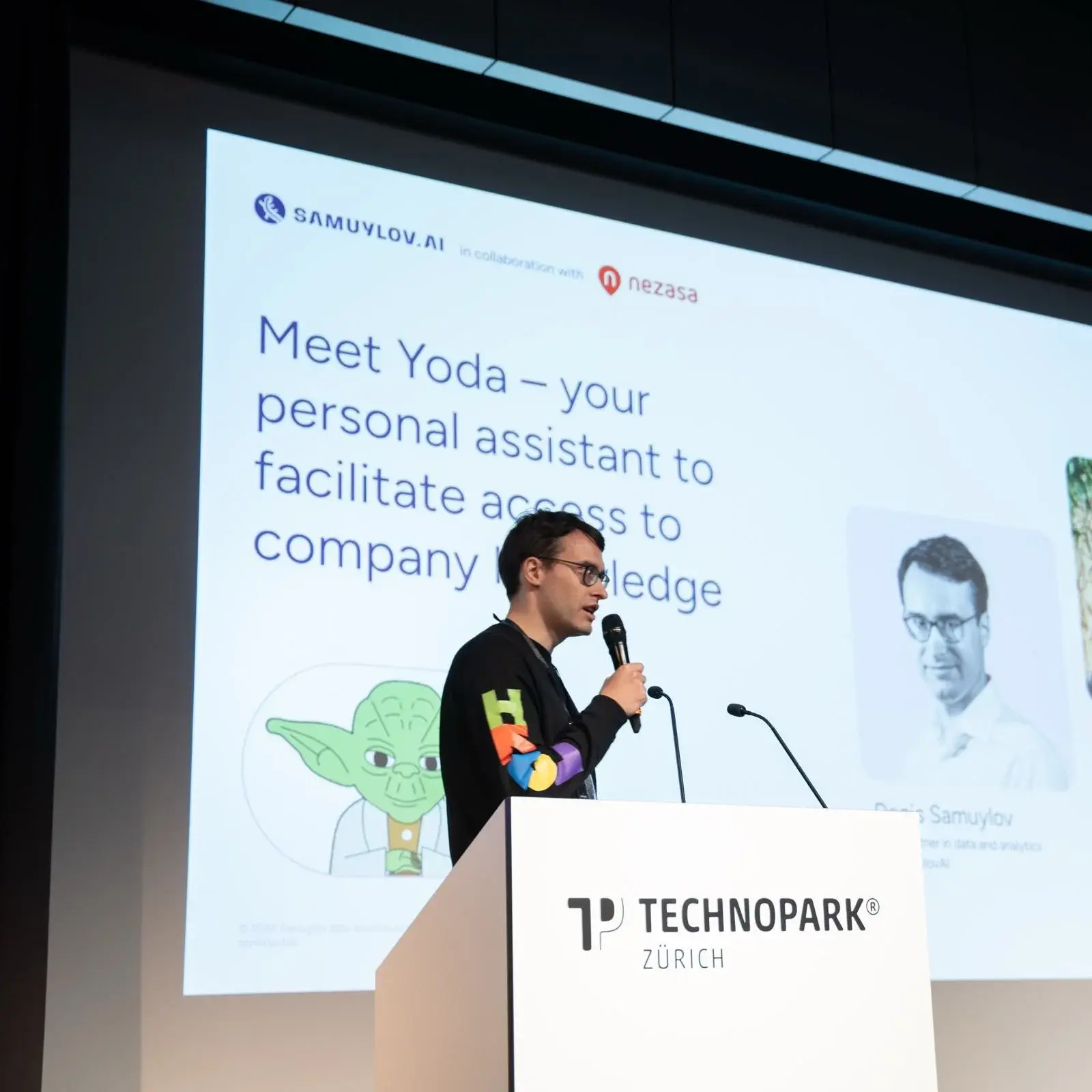
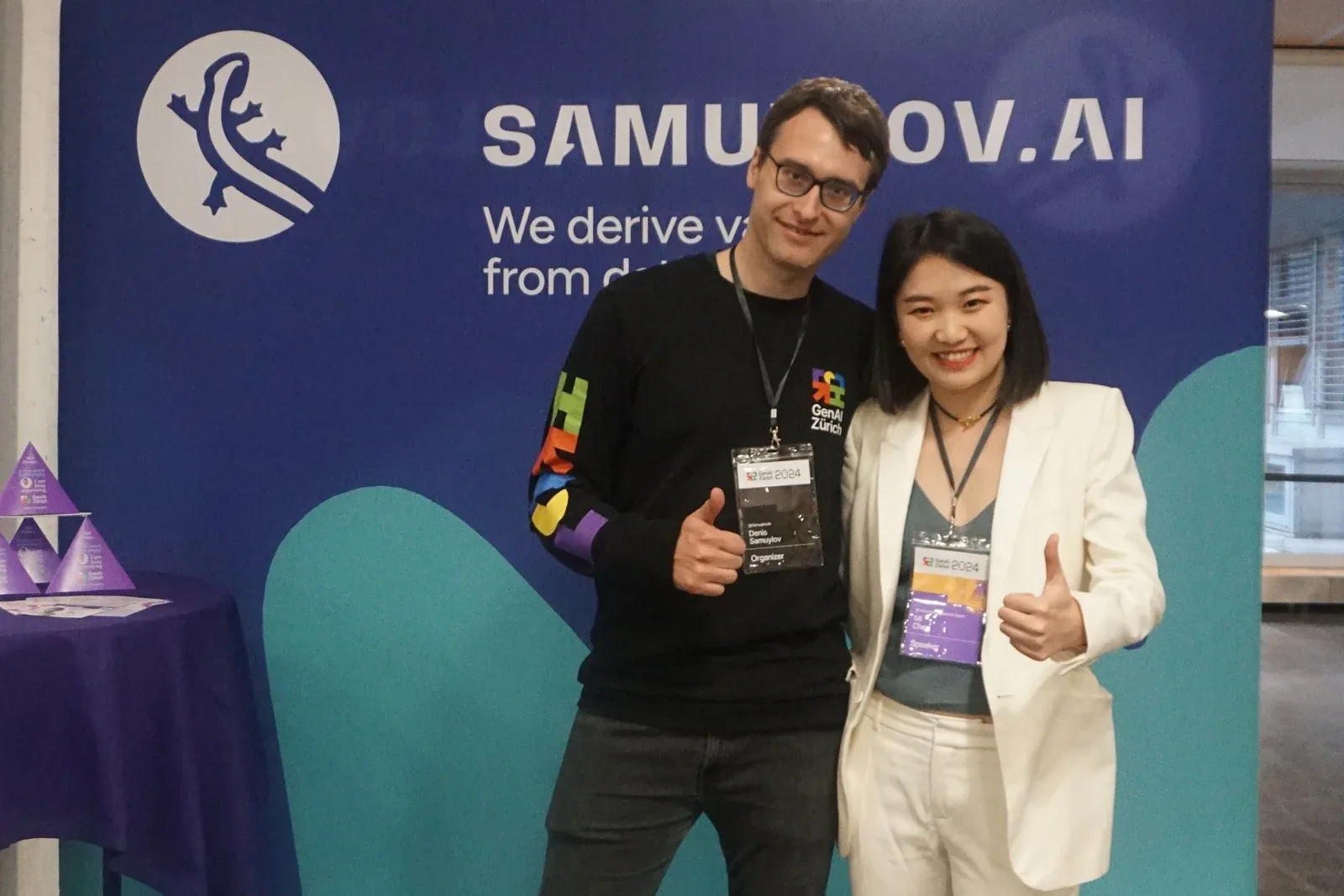
On 29 May 2024, Denis Samuylov gave “GenAI for All: How SMEs can Harness Generative AI for Success?” at GenAI Zürich (opens in a new tab), the conference he co-founded, at Technopark Zürich.
Two sentences, from two different rooms that year.
A large corporation, on stage at every conference: we built a proof of concept and took it to production.
A mid-sized company, in the corridor afterwards: should I be spending my time on this at all?
The second question is the more serious one, and it rarely gets a straight answer. Enterprise case studies are told at a scale that doesn’t transfer – the platform team, the governance board, the seven-figure budget. A 100-person company hears them and concludes, correctly, that none of it applies.
The arithmetic
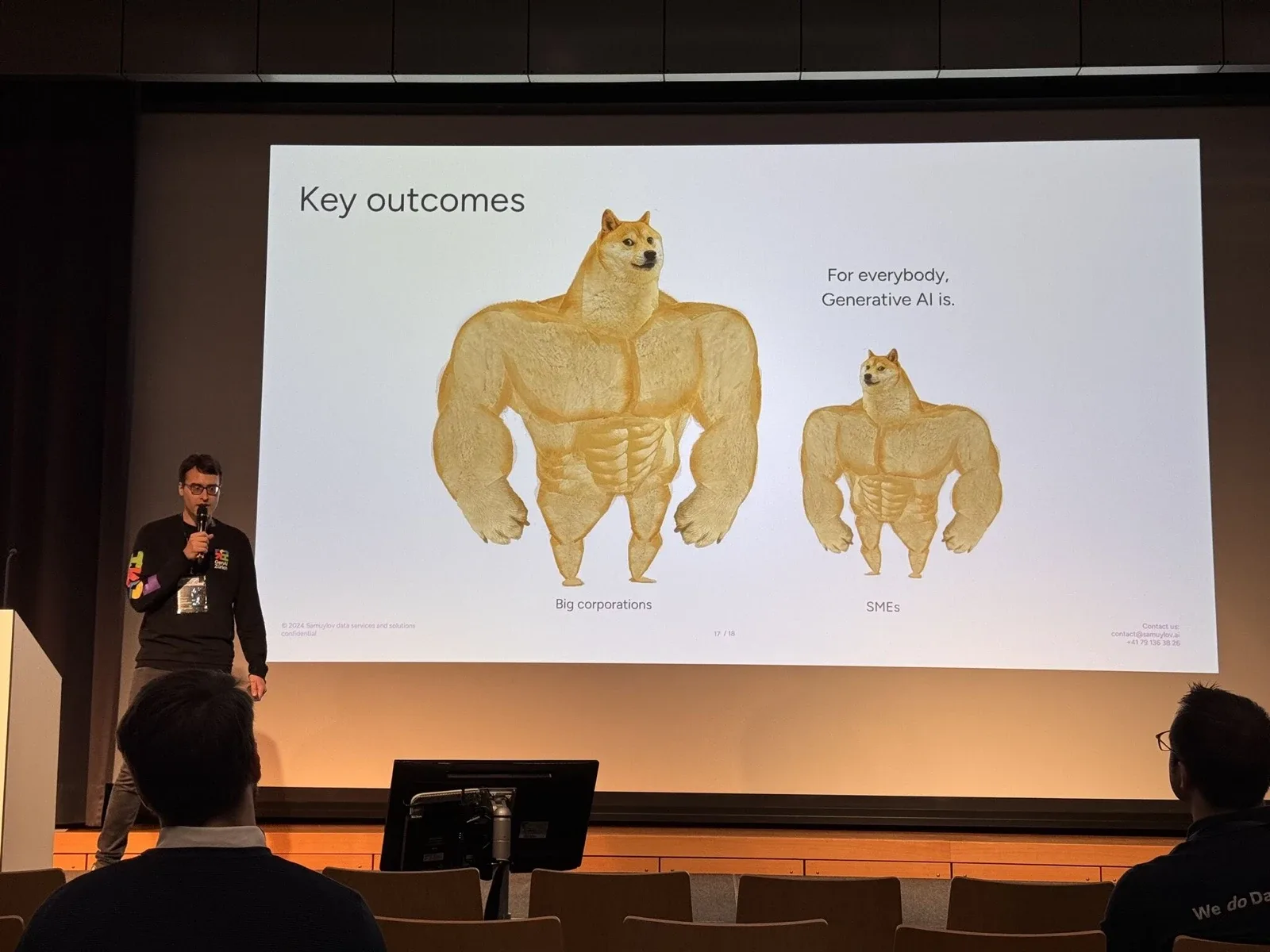
#Start small. A 100-person company working forty-five-hour weeks that frees one hour per person each week gains about 2.2 full-time equivalents of capacity. A focused assistant on an existing data platform can take about 45 hours to build.
Swap in your own headcount, hours and time saved, and count the cost of running the system. Our AI ROI calculator does the sums for you.
The proof behind the slide
#The talk paired the arithmetic with a real system. Together with Patrick Hammer, Co-Founder and Product Manager for Data & AI at Nezasa, we built Yoda: an assistant that answers questions from company knowledge, with links to its sources.
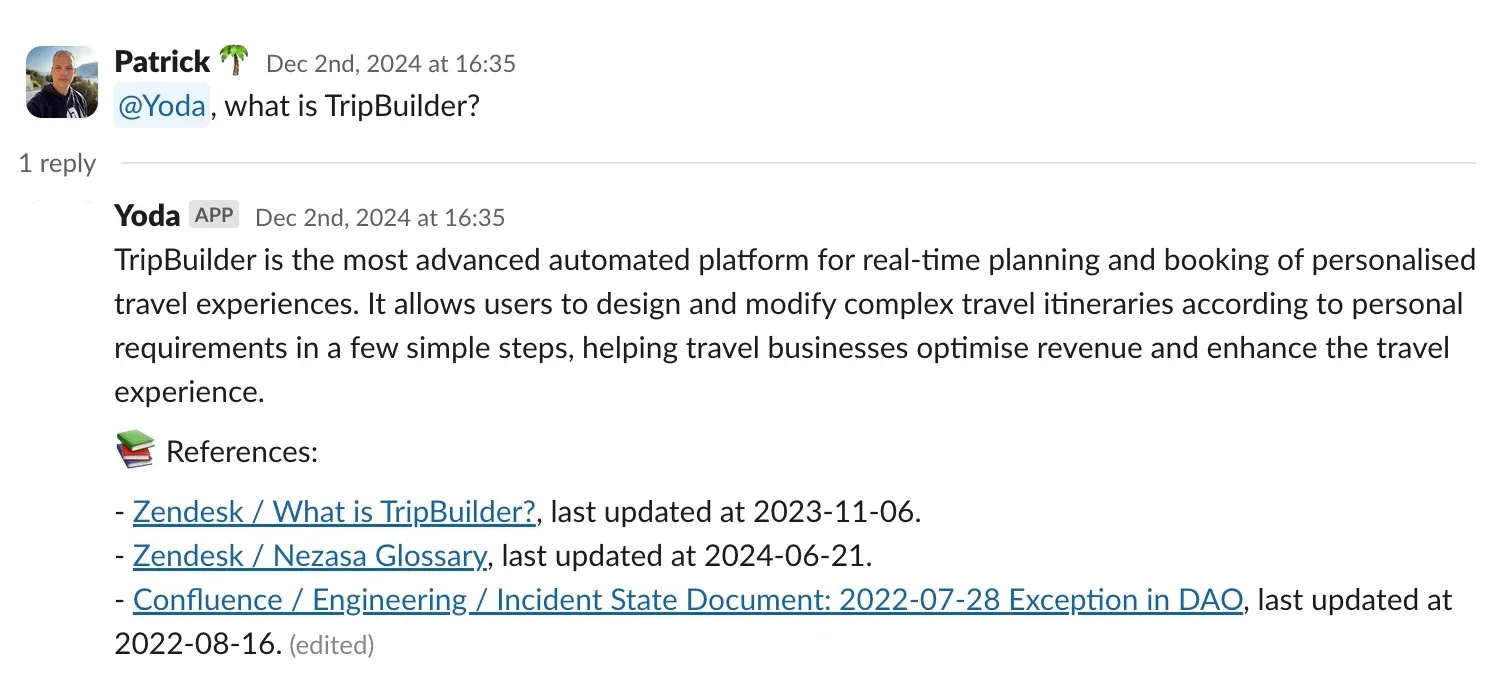
Nezasa measured 55% of evaluated questions answered without a product expert, and estimated the capacity released at roughly two full-time employees. The full story is in the case study.
Three delivery choices
#Define your goals, you must. The first goal was simple: show useful access to company knowledge with a small build.
The basics, you build. Nezasa’s data platform already handled the plumbing, so the assistant only had to extend it to Confluence and Zendesk.
Existing tech available to your users, utilize you should. Yoda answered in Slack threads, where people already worked, and every answer could be rated with a thumbs up or down.
Where a smaller team can start
#Pick one workflow, check which foundations already exist, and estimate the capacity a focused build could free. Then measure what people actually gain.
A one-week build was possible here because the data foundation already existed. Keeping an assistant useful as its documentation and questions change requires ongoing operation and evaluation. See Agents-as-a-Service, or Start a conversation.